 By Pavithran Thurairatnam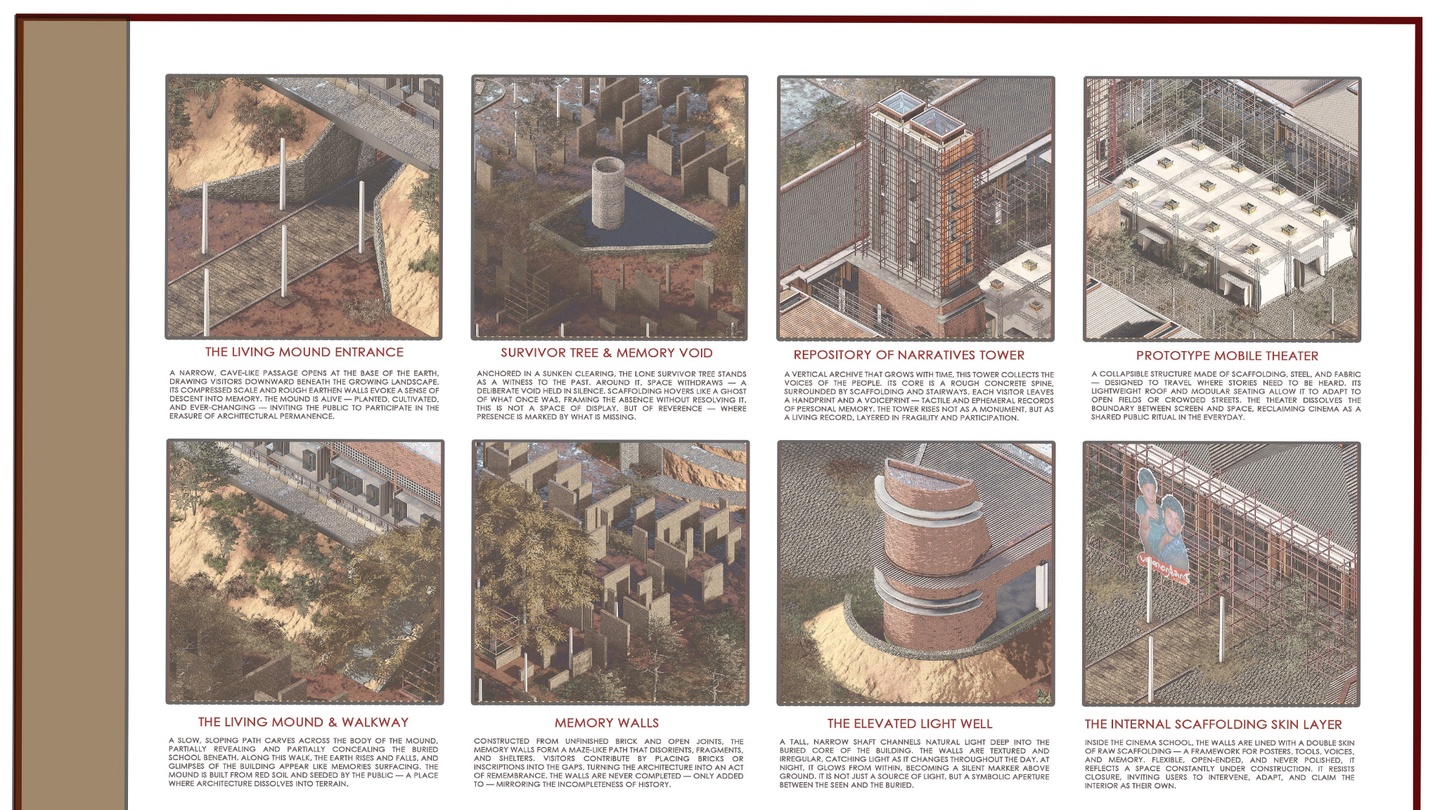
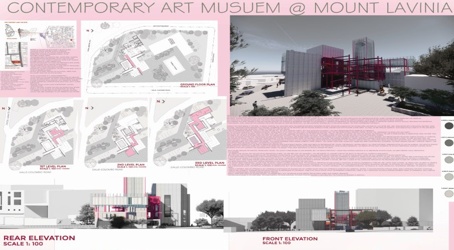
The design thesis, investigates how architecture can mediate political narratives, collective memory, and post-war trauma through a spatial language informed by cinema. Emerging from the particular socio-political landscape of Kilinochchi—where memory has been repeatedly overwritten, erased, and reconstructed—the project challenges architecture’s historical complicity in producing one-sided narratives. Instead, it proposes an alternative form of memorialization: one that embraces subjectivity, multiplicity, and an evolving process of healing. The design takes the form of a landscape-driven commemorative ground anchored by three primary components: the Repository of Narratives, the Cinema School, and the Mobile Cinema, along with a network of memory spaces, survivor trees, and evolving earth interventions. Interpreted together, they constitute an architectural framework that resists monumental closure and instead prioritizes narrative openness.



© 2022 Nippon Paint Sri Lanka. All rights reserved.